
In Defense of Wade McClusky
By David Rigby
©2021 by David Rigby. All rights reserved.
Photo Credit: U.S. Naval History and Heritage Command
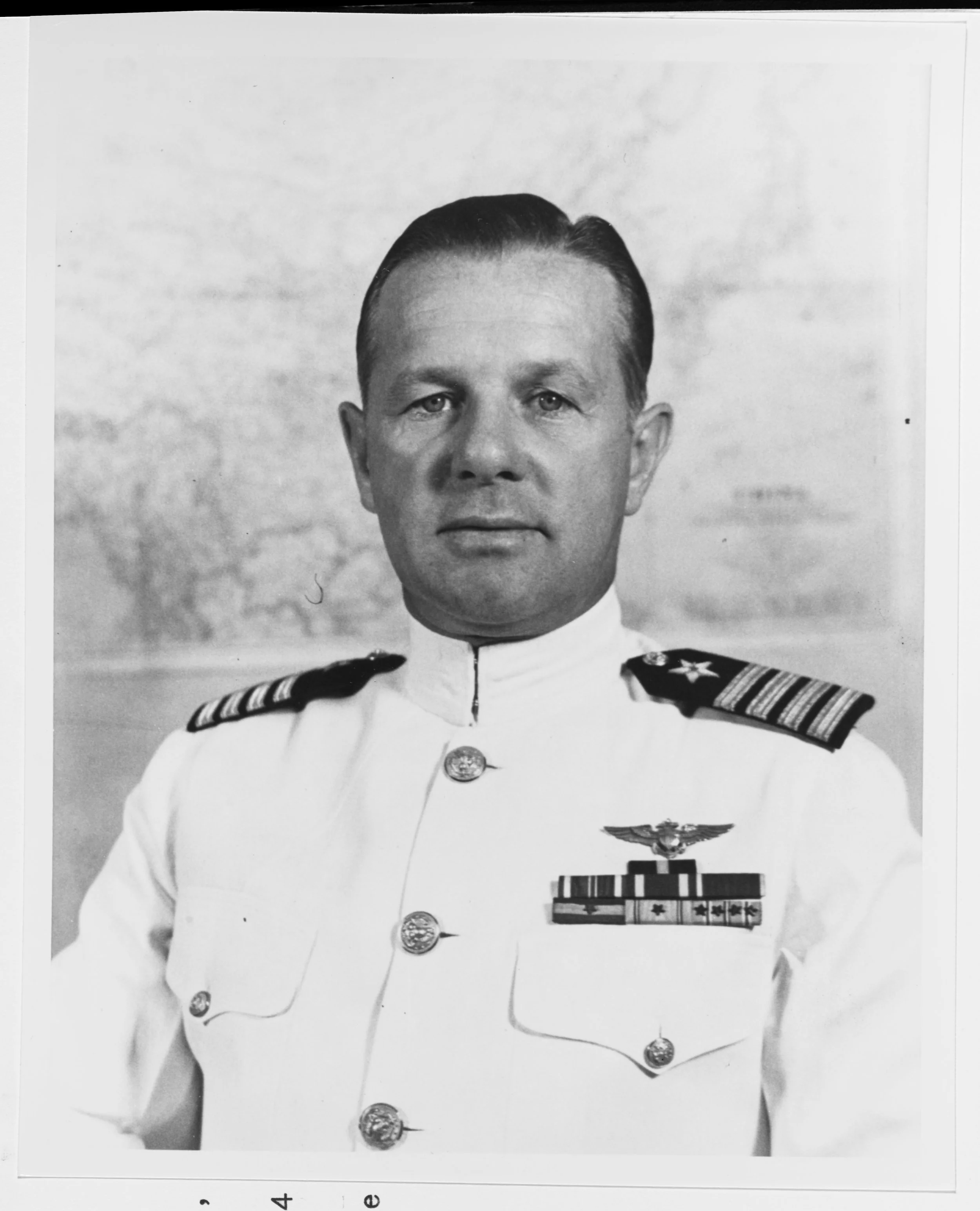
Photo Credit: U.S. Naval History and Heritage Command
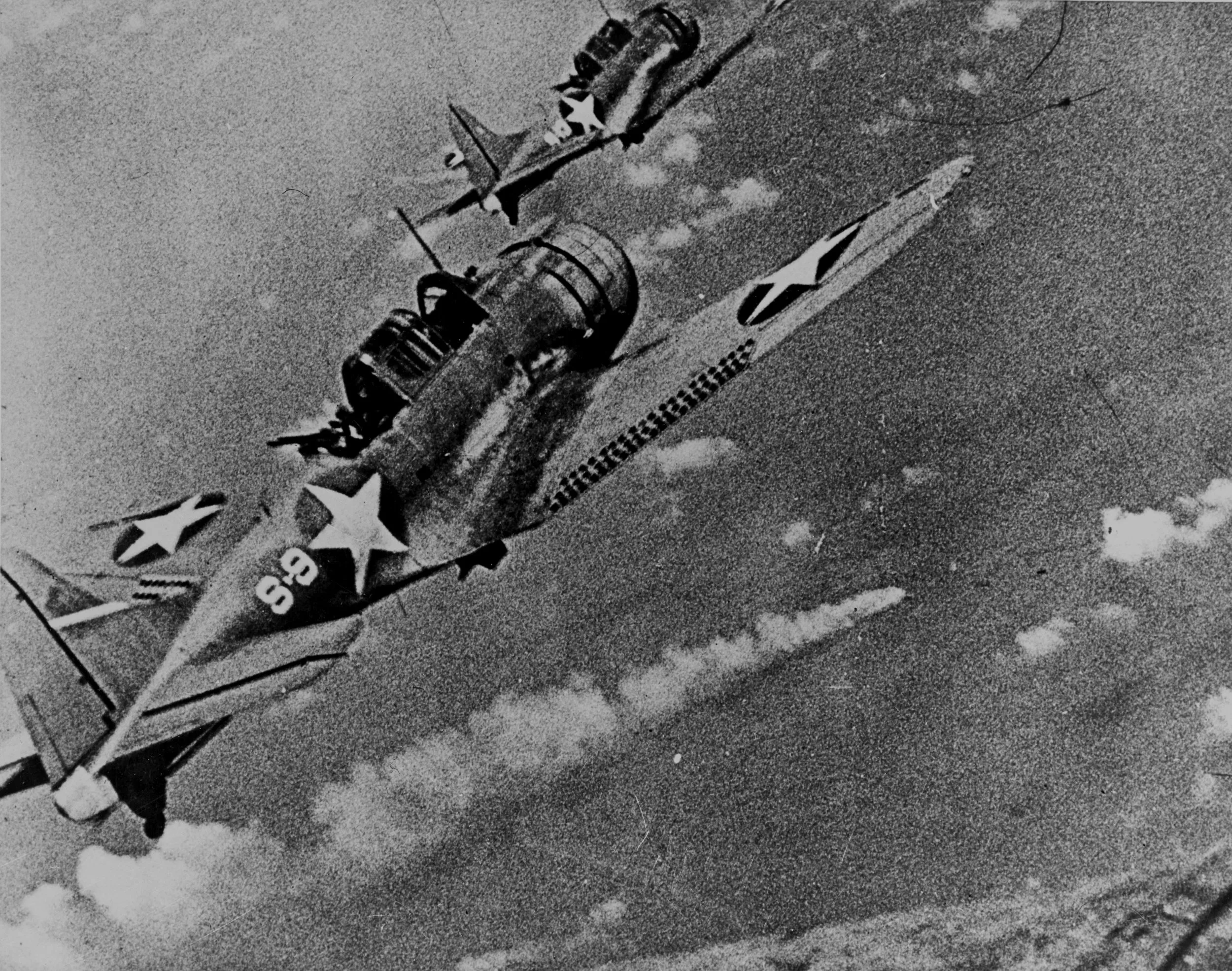
Flying an SBD-3 dive-bomber, the legendary Dauntless, LCDR Wade McClusky, Air Group Commander of U.S.S. Enterprise (CV-6), turned in the most brilliant performance of any pilot in the Battle of Midway. The 500 lb. bomb that he himself dropped was a near-miss, but McClusky found the enemy fleet on June 4, 1942 under extremely difficult conditions and in the nick of time. Doing so enabled the pilots in his two squadrons of Enterprise dive-bombers to destroy two of the four Japanese aircraft carriers to be sunk at Midway. I describe McClusky’s exploits in my book Wade McClusky and the Battle of Midway (Osprey, 2019). If not for Wade McClusky’s tracking abilities, the Japanese would have been able to launch full deckload strikes of aircraft from multiple carriers against the American ships which very probably would have given the battle a very different outcome. Despite this, most historians today are stubbornly unwilling to admit that Wade McClusky was a hero at Midway.
Early accounts of the Battle of Midway, such as those written by Samuel Eliot Morison and Walter Lord, duly praise McClusky’s leadership at Midway. That situation began to change in the late 1980s when revisionist historians began to alter the traditional account of the Midway battle. Consequently, almost every book about Midway published since 1990 except my own characterizes Wade McClusky as an incompetent dive-bomber pilot who is supposed to have bungled the attacks against IJN Akagi and Kaga at Midway. In this paradigm, McClusky is described as a fighter pilot who supposedly had no business leading dive-bombers into battle. These critics ignore facts that they find inconvenient such as that McClusky did indeed find the Japanese fleet, that the attack he ordered on the two Japanese carriers was resoundingly successful, that he did follow prescribed doctrine, and that he had compiled four hundred hours of flying time in dive-bombers before the war. This era of McClusky-bashing continues unabated today, when in each new book about the Battle of Midway we are almost always told that it was only the quick thinking of LT Richard Best as Commanding Officer of Bombing Squadron Six (VB-6) that prevented Akagi from escaping. This sentiment is in full flower in the 2019 movie, Midway, which gives Wade McClusky a very subordinate role and tells the entire story from the perspective of Dick Best. The truth is that Dick Best and Wade McClusky were both heroes at Midway. McClusky found the enemy during the difficult morning search on June 4, 1942 and Dick Best displayed perfect bombing accuracy that day by scoring a hit with his 1,000 lb. bomb against Akagi as well as another hit against Hiryu during the afternoon attack.
Wade McClusky was indeed a fighter pilot. At the time of the Pearl Harbor attack, he was the commanding officer of Fighting Squadron Six (VF-6), flying from the Enterprise. However, he also had 400 hours in dive-bombers by then as well as significant experience flying older model torpedo planes, patrol aircraft, and catapult-launched observation planes. His dive-bomber time was almost all in older biplane dive bombers—Vought SBU-1s and Curtiss F8C-4s. He had only logged eight flights (with four carrier landings) in an SBD prior to Midway, but his time in the earlier model dive-bombers made him familiar with the technique of dive bombing. Prewar pilots were versatile. Dick Best and LCDR Maxwell Leslie, both revered as dive-bomber pilots, had each flown fighter planes extensively before switching to dive bombers. The Douglas SBD dive-bomber was a new design that had only been in service for a year at the time of Pearl Harbor. The newness of the SDB meant that no American dive bomber pilot who flew at Midway had by then even come close to putting in 1,000 hours flying SBDs. Thus, as I wrote in my biography of Wade, “the idea that there were dozens of American pilots who had accrued hundreds, or even thousands, of hours at the controls of an SBD by the time of Midway, and were therefore more suited than McClusky to lead the attack, is quite erroneous.”¹
It was only natural that upon becoming Enterprise air group commander in March 1942 McClusky would choose to give up his fighter plane and fly a dive-bomber instead. As air group commander his responsibilities now extended beyond the ship’s fighter squadron. He was now responsible for the entire complement of aircraft—fighters, dive-bombers, and torpedo planes, flying from Enterprise. The SBD dive-bomber had the longest range of any American naval aircraft at the time. Flying one would enable McClusky to lead the group at its maximum striking range. In switching from an F4F Wildcat to an SBD, Wade was following the example set by his predecessor as group commander, CDR Howard Young. Like McClusky, “Brigham” Young had been a fighter pilot who switched to flying an SBD when he became Enterprise Air Group Commander. Nobody has ever criticized Howard Young for leaving his fighter plane behind and flying a dive-bomber when he led the early Enterprise strikes against targets in the Marshall Islands, at Wake, and at Marcus Island.
Wade McClusky was one of the most experienced pilots in the Navy in 1942. A 1926 Annapolis graduate, McClusky had more than 2,900 hours of flying time by the time of Midway. Since earning his wings as a naval aviator in June 1929, McClusky had become expert in flying more than a dozen different naval aircraft types, including dive-bombers, fighters, and torpedo planes. McClusky’s flight instructors at Naval Air Station Pensacola recognized his talents as a pilot early on when they presciently wrote “Recommended for Combat Duty” on his final grade report in 1929.² The Annapolis Class of 1926 was special. At least twenty-three of its members would play prominent roles at Midway, including such luminaries as Max Leslie and Marine pilot MAJ Lofton Henderson. Later in the war no fewer than thirty-eight Class of ’26 alumni, including Wade McClusky, would command escort carriers in combat.
The coordinates that McClusky had been given on the morning of June 4, 1942 for the location of the Japanese fleet were two hours old and proved to be inaccurate. That meant that after reaching the intended interception point, McClusky had to search before he could strike. His planes had been in the air for over two hours and fuel was running low. He could have turned back to the Enterprise to refuel, but he knew that the time it would take to do that was a luxury he could not afford. He had to find the enemy on this flight. It would have been natural to turn south, towards Midway. To the south is where the Japanese fleet would have been had it been making better than expected speed. And, heading south would have enabled his pilots to land and refuel at Midway atoll itself. But McClusky had a gut feeling that the Japanese were somewhere north of him. Accordingly, he led his pilots into a sharp turn to the north. His intuition quickly paid off when he spotted the Japanese destroyer Arashi far below making high speed to the northeast. Correctly judging this to be a straggler from the main force, McClusky turned right again, onto the destroyer’s heading. Twenty-five minutes later he and the thirty-two Enterprise dive-bombers he was leading were over the Japanese fleet and its four carriers Akagi, Kaga, Hiryu, and Soryu. McClusky issued his attack orders, assigning each of his two squadrons one of the two carriers nearest him, Akagi and Kaga. For a variety of reasons which remain in dispute to this day, the two squadrons did not divide evenly and more of the American aircraft dove to drop their bombs on Kaga than on Akagi. Nevertheless, both of the big carriers were destroyed in the attacks by Enterprise dive-bombers.
Wade McClusky’s critics are unsatisfied with the results achieved and blame him for the somewhat ragged nature of these attacks. It has become fashionable amongst these historians to take turns claiming that Wade McClusky didn’t know how to handle a dive-bomber and was unfamiliar with dive-bombing tactics and doctrine, charges which are completely false. His own bomb missed the Kaga by only thirty feet, which is not how amateurs perform. The accusation that Wade McClusky did not understand dive-bombing doctrine is based on a very slender reed; exactly one sentence in the 200-page long 1941 document known as Current Tactical Orders and Doctrine U.S. Fleet Aircraft, commonly known as USF-74. That sentence states that when assigning groups of dive-bombers, such as McClusky’s two squadrons, to multiple shipping targets, “No. 1 target is the farthest away.” ³ Elsewhere in the document however, USF-74 states just the opposite; that upon arriving at the scene, the Group Commander should assess the situation and assign targets according to his best judgment.⁴ That was also “doctrine” in 1942, and it is exactly what Wade McClusky did. It is ridiculous for Wade McClusky’s critics to claim that one sentence on page 105 of the extremely long, rambling, and contradictory document that is USF-74 constituted the undisputed entirety of U.S. Navy dive-bombing doctrine in 1942.
As he approached the enemy ships at Midway, Wade McClusky saw the two big carriers as being to his right and his left, respectively. Dick Best saw it differently; as the carrier that turned out to be Akagi being further away from the approaching American aircraft than was the Kaga. Interestingly, the leader of Scouting Squadron Six (VS-6), LT Earl Gallaher, a dive-bomber pilot well-liked by historians, supported McClusky’s view of how the battle unfolded. In the 1960s Gallaher drew a map for historian Walter Lord showing that as the Enterprise dive-bombers approached, Kaga and Akagi were located exactly equidistant to the right and left, respectively and just like McClusky said; not as a near and a far target. McClusky was flying out ahead of Scouting Six (VS-6), while Best’s VB-6 was behind and below. McClusky ordered Gallaher and VS-6 to attack the carrier on the left (Kaga) and told Best and VB-6 to take the carrier on the right (Akagi). Dick Best’s radio was out of order and he never heard the order. Best was certain McClusky and the leading squadron would overfly the Kaga and would attack Akagi, leaving Kaga for Best’s squadron trailing behind. Surprised and angered to see McClusky and the pilots of VS-6 beginning to dive on Kaga, Best signaled to his squadron to close their dive brakes and follow him to the second carrier. Not all of them complied. Some of Best’s Bombing Six pilots followed McClusky and Scouting Six by diving on Kaga. The question is, how many?
The heart of the argument put forward by his critics is the claim that Wade McClusky’s supposed bungling in diving on what is said to have been the near instead of the far target resulted in only three American dive-bombers (Dick Best and his two wingmen) being left over to attack the Akagi, and that therefore the Japanese flagship almost escaped. They also claim that of the three planes attacking Akagi, only Best scored a hit with his 1,000 lb. bomb—even though Dick Best himself in a 1995 oral history interview with William J. Shinneman stated that he and both of his wingmen all scored hits.⁵ The critics of McClusky, who all claim to have examined Walter Lord’s Midway papers at the Naval History and Heritage Command in Washington, ignore the repeated instances in that collection in which Dick Best tells Walter Lord that all five of the dive-bombers in his first section of Bombing Six had attacked Akagi. In my book, I quote from a March 7, 1967 letter from Best to Lord in which, referring to the moment when he realized that a large enough number of American aircraft had attacked the Kaga to ensure the destruction of that carrier, Best shook his plane’s elevators to signal the four other pilots in his section to follow him over to Akagi. Best wrote: “My shaking elevators could clearly be seen by all four of them and was an unmistakable and unambiguous signal to close up.” ⁶ This is just one of many references Best made in his correspondence with Lord to the fact that LT Wilbur “Bill" Roberts and ENS Delbert Halsey, pilots number four and five in the first section of VB-6, were with Best and his two wingmen in the attack on Akagi. Later, in the 1995 Oral History interview, Dick Best was less sure of where Roberts and Halsey were and acknowledged that they had some trouble following him in the confusion. But Best never said that Roberts and Halsey violated formation discipline to the extent that they dove before their section and squadron leader and on the wrong ship. For his part, Bill Roberts never had any doubt as to where he was or which ship he bombed. Roberts told Walter Lord in the 1960s that he dove with Dick Best—meaning Roberts dove on Akagi. Roberts particularly remembered that the carrier he dove on had a portside island—a feature of Akagi that was, and is, exceedingly rare in an aircraft carrier. Delbert Halsey ran out of fuel after pulling out of his dive and had to make a water landing. He and his rear-seat gunner were never seen again, but Halsey did complete his dive and drop his bomb, and he did it all as Bill Roberts’s wingman—meaning that he too bombed Akagi.⁷ In an unpublished first-person account that he wrote after the war, Bill Roberts admitted that some VB-6 SBDs dove with McClusky on Kaga, but he was adamant that five SBDs—Best and his two wingmen plus Roberts and Halsey—dove on Akagi. Roberts wrote: “Through a mix-up in signals, only five of us of Bombing Six dived on the Akagi—the rest of the squadron joined Scouting Six in a dive on the Kaga.” ⁸ Five aircraft, not three. That is a quote that Wade McClusky’s critics never include in their books because it interferes with their insistence that McClusky’s supposed bungling left only three planes to bomb Akagi. Roberts also wrote that the five planes scored three hits, not one, meaning that Akagi did not “almost escape” as the McClusky bashers are so fond of claiming.
In addition to Best’s entire five-plane first section of VB-6, there was also at least one additional American dive-bomber, a sixth, that dove on Akagi. ENS Lewis A. Hopkins, an SBD pilot in the second section of Bombing Six—again, Dick Best’s squadron, modified a sketch map Walter Lord had sent him to show that he too had dropped his bomb on Akagi—a map I reprinted in my book. After the war, Lewis Hopkins always insisted to his family that he had bombed the Akagi. Many historians interviewed Lewis Hopkins over the years, and he told all of them that he bombed Akagi. But they didn’t listen. The anti-McClusky narrative requires that Lewis Hopkins bomb Kaga, and so almost every book about Midway written since 1990 except mine dutifully has Lewis Hopkins bombing Kaga, even though that is not the way it happened. Lewis Hopkins never expressed an opinion, positive or negative, about Wade McClusky. He did greatly admire Dick Best and was proud to have served in Best’s squadron. His daughter recalls that Lewis Hopkins’s memories of Midway remained crystal clear right up until his death in 2008. It is highly unlikely that a man like Hopkins would have mixed up such major details as which ship he bombed and which pilots were with him during the attack. Hopkins was aware of the alternate narrative being floated after 1990—that almost all of VB-6 bombed Kaga. He never liked that scenario and he never believed it.
Friedrich Hayek, in his 1944 critique of Socialism, The Road to Serfdom, describes how a belief in the inevitability of the replacement of competition by systems of central economic planning came to be universally accepted among Socialists. Hayek’s words in that regard apply equally well to how the myth of Wade McClusky’s supposed bungling took hold among historians after 1990:
“This argument is rarely developed at any length—it is one of the assertions taken over by one writer from another until, by mere iteration, it has come to be accepted as an established fact. It is, nevertheless, devoid of foundation.” ⁹
It is a proven fact that at least six American dive bombers dove on Akagi, and that they scored three hits—the testimony of eyewitnesses being the proof. But you will never hear any of Wade McClusky’s critics—i.e., almost all of the current Midway historical establishment, admitting that. To fit the facts to their prearranged narrative that McClusky bungled, these historians need to have almost everyone bombing Kaga and only one bomb striking Akagi, and so in their books, almost everyone bombs Kaga and only one bomb strikes Akagi. Facts are not allowed to get in the way of that story. But facts are stubborn things. It is difficult to keep them hidden. If these historians have evidence in the form of direct quotes from eyewitnesses (as opposed to guesses by armchair strategists based on who flew home on whose wing) for their beloved three planes and one bomb hit-only scenario for the attack on Akagi, they should print those quotes, verbatim, with a reputable source clearly identified. If not, they should stop using Wade McClusky as their whipping boy.
America’s dive bomber pilots won the Battle of Midway, but half of those pilots never would have found the enemy had it not been for Wade McClusky, a pilot who had an excellent understanding of dive-bombers and dive-bombing doctrine, and who did not bungle anything.
References
1 | David Rigby. Wade McClusky and the Battle of Midway. (New York: Osprey/Bloomsbury, 2019): 267.
2 | As quoted in Rigby, Wade McClusky, 78.
3 | As quoted in Rigby, Wade McClusky, 184.
4 | Rigby, Wade McClusky, 268.
5 | Oral History Memoir of LCDR Richard Halsey Best, USN (Ret) as told to William J. Shinneman, 11 August 1995. King of Prussia, Pennsylvania, 1995. Courtesy of the National Museum of the Pacific War, Fredericksburg, Texas, pg. 42
6 | As quoted in Rigby, Wade McClusky, 202.
7 | Stephen L. Moore. Pacific Payback: The Carrier Aviators Who Avenged Pearl Harbor at the Battle of Midway. (New York: NAL Caliber, 2014): 246. Rigby, Wade McClusky, 203.
8 | RADM Wilbur E. “Bill” Roberts, USNR (Ret.). “Many Planes Heading Midway.” n.d. Unpublished manuscript, pgs. 6–7.
9 | F.A. Hayek. The Collected Works of F.A. Hayek. Vol. 2. The Road to Serfdom. (Chicago: The University of Chicago Press and Routledge, London, 2007): 91.